Contributors:
Amol Ghemud Published: August 14, 2018
Summary
Share On:
In This Article
Search engine optimization isn’t just about keywords anymore. With every new change in Google’s algorithm, SEO becomes less of a single process or skill and more of a comprehensive strategy which needs to be implemented using SEO techniques. Successful SEO techniques need to be firmly embedded into an enterprise’s entire communications approach from the beginning.
Identifying the audience and choosing how to address them, are now crucially integrated into the never-ending quest for search engine visibility. That means the SEO expert needs to take a holistic view of the process and all its moving parts.
And that, more than anything else, can lead to SEO problems.
The SEO challenges of the past – questions about keyword density, meta tags, and so much more – are increasingly giving way to the most complex issues a company faces as it brands and positions. Good SEO demands tech savvy, clear communication, and project management skills. Let’s look at some of today’s top SEO problems.
SEO problems faced by marketers
1. Finding Some Quick Fixes
Business owners should understand the working of search engines and the importance of organic search. It doesn’t have a quick fix. Although there are some quick fixes, the results aren’t that long lasting. Creative SEO techniques do not rely on quick fixes.
2. Thinking About Tough Competition
Often, website owners think that their competition is doing something big, then why couldn’t they do. Many websites follow shady link building, duplicate content, exact match domain, and many similar practices, which make them successful temporarily. It becomes quite disheartening for those using white hat SEO techniques, but failing to claim what they truly deserve.
3. The Hourly Rate Riddle of SEO Consultants
If you are an SEO consultant, you often have noticed that your client doesn’t object in the start, but midway, the objection on hourly rate comes. Despite liking the proposal, the hourly rate discussion becomes disturbing for the SEO consultants. The reason is simple; they don’t have that level of SEO understanding as you have, so their response is obvious.
4. Demanding SEO Results for Poor Products
SEO techniques help a lot in making a business successful, but it is not a solution to everything. If a website carries poor products or inefficient services, or worst customer care, then SEO can’t deliver the desired results.สล็อตเว็บตรง
5. SEO Kept Separate from Web Development
Many SEO clients opt for designing first and developing a website prior to implementing SEO techniques. In such a case, the website is expected to perform poorly. Such a site takes more expensive changes to fix the problems later on.
The best approach is to acquire the services of an SEO consultant from the planning phase of web designing and development.
Do you want to optimize your website, drive more traffic and deliver higher conversions? This is a checklist that we follow, and can get your site to rank consistently on top of search engines.
Download this ultimate SEO Checklist which includes On-Page SEO as well as Off-Page SEO techniques that will help you rank well on the search engines.
Understanding SEO techniques
SEO is short for search engine optimization. Search engine optimization is a methodology of strategies, techniques and tactics used to increase the amount of visitors to a website by obtaining a high-ranking placement in the search results page of a search engine (SERP) — including Google, Bing, Yahoo and other search engines.
SEO helps to ensure that a site is accessible to a search engine and improves the chances that the site will be found by the search engine.ทดลองเล่นสล็อต pg
SEO is typically a set of “white hat” best practices that webmasters and Web content producers follow to help them achieve a better ranking in search engine results. There is also something called as black hat SEO techniques.
What Is Black Hat SEO?
Black hat SEO refers to a set of practices that are used to increase a site or page’s rank in search engines through means that violate the search engines’ terms of service.สล็อต88
Black Hat SEO is most commonly defined as a disapproved practice that nevertheless could increase a page’s ranking in a search engine result page (SERP). These practices are against the search engine’s terms of service and can result in the site being banned from the search engine and affiliate sites.
Creating pages, subdomains, or domains with duplicate content
Pages with malicious behavior, such as phishing, viruses, trojans, and other malware
What Is White Hat SEO?
The term “white hat SEO” refers to SEO techniques that are in line with the terms and conditions of the major search engines, including Google.ราคาบอลพรุ่งนี้
White hat SEO is the opposite of Black Hat SEO. Generally, white hat SEO refers to any practice that improves your search rankings on a search engine results page (SERP) while maintaining the integrity of your website and staying within the search engines’ terms of service. These tactics stay within the bounds as defined by Google.
As an entrepreneur or co-founder, you’re no stranger to the importance of using good tools to help improve your business. As technology becomes increasingly intertwined into our daily lives, digital marketing continues to play an essential role in a small business. So, to help the startup community, here’s a list of my personal favourite SEO tools that have helped transform not only my business, but hundreds of others around Australia.
1. Google Page Insights
Site speed and usability are crucial to your website’s SEO and page ranking. At a glance, Google Page Insights gives you this on both desktop and mobile. Simply drop the URL of the website you want to check into the tool, and within seconds, a test is run and you have a score out of 100.
2. Screaming Frog SEO Insights
This is by far the favourite SEO tool. Again, with a simple URL drop, the tool will crawl your website for broken links, which can damage your SEO and page ranking and credibility. If you’re working with a large website, this can be a useful way to spot-test your website health, fast.
3. Google Search Console
Another excellent tool from Google. This tool gives you the ability to constantly analyse your website and identify crawling issues. This tool requires a bit of technical set up, but there are plenty of guides to help you through it available online. I can promise you now, the pain is well worth it!
4. Google Keyword Planner
Yet again Google provides another amazing SEO tool for startups. Simply type in your website URL or keyword ideas, and Google Keyword Planner (GKP) will give you monthly search volumes for your keywords. It will also suggest other keyword ideas broadly related to the one you put in. This is a great way to discover new keywords to give your website an organic search boost.
5. Yoast SEO
Unfortunately, this hidden gem is only available as a WordPress plugin, but it is the ultimate tool for entrepreneurs and startups to boost their SEO. It allows you to easily determine your meta description, page title and URL slug. If you’re not technically savvy, this SEO tool is a fantastic support. It uses a traffic light system to tell you how well your web page is optimised for Google search rankings.
6. Portent SERP Preview
Continuously working out of excel to write title tags, meta descriptions and URL structure can drain your creativity. I love using this tool to visualise what I’m writing. I find it helps to write awesome copy.
7. Copyscape
Google has been strict with duplicate content in recent updates, and will penalise your site accordingly, which can seriously damage your SEO and ability to rank on Google and attract new customers to your business.ทดลองเล่นสล็อต
Copyscape is a great way to combat this, to ensure all your website content is unique! You should also use this tool to audit your own pages to make sure no one is copying content from your website without your knowledge.
8. Google Analytics
Google Analytics (GA) is by far the best analytics package on the market. It’s unbelievable that it’s still free! To get the full understanding of the behaviour on your website this tool is a must-have for startups.
Not only can you understand your user experience, but you can track all your online campaigns to get a complete understanding of what’s working and what’s not with your audience.สล็อต pg
Here’s a quick and simple SEO ROI Calculator
An SEO ROI calculator allows a data-centric approach when curating new strategies.สล็อตเว็บตรง
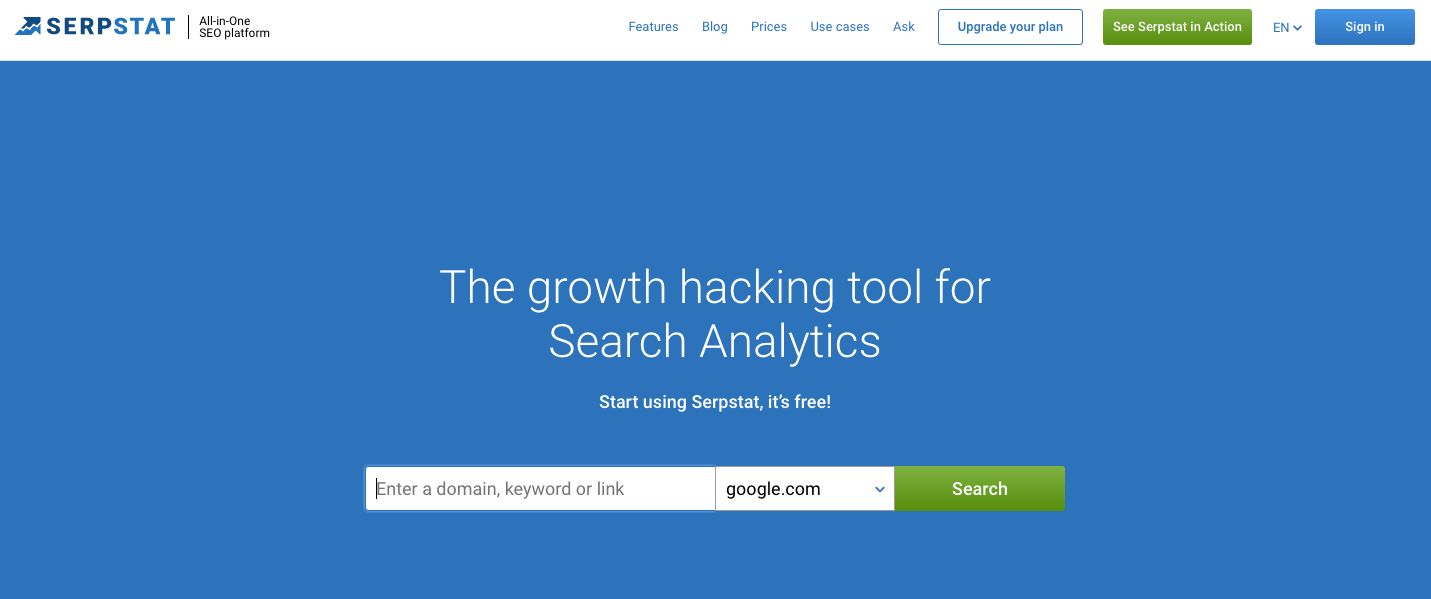
Launched in 2013, Serpstat is a relatively new player in the SEO market.ทดลองเล่นสล็อต
Serpstat allows you to do organic keyword tracking, spy on your competitor’s keywords, perform SEO site audits, PPC analysis, backlink analysis, and much more.
If you’re on a limited budget, but you need a good, reliable SEO tool which can help you find trending keywords in your niche and see what strategies your competitors are using, go with Serpstat.
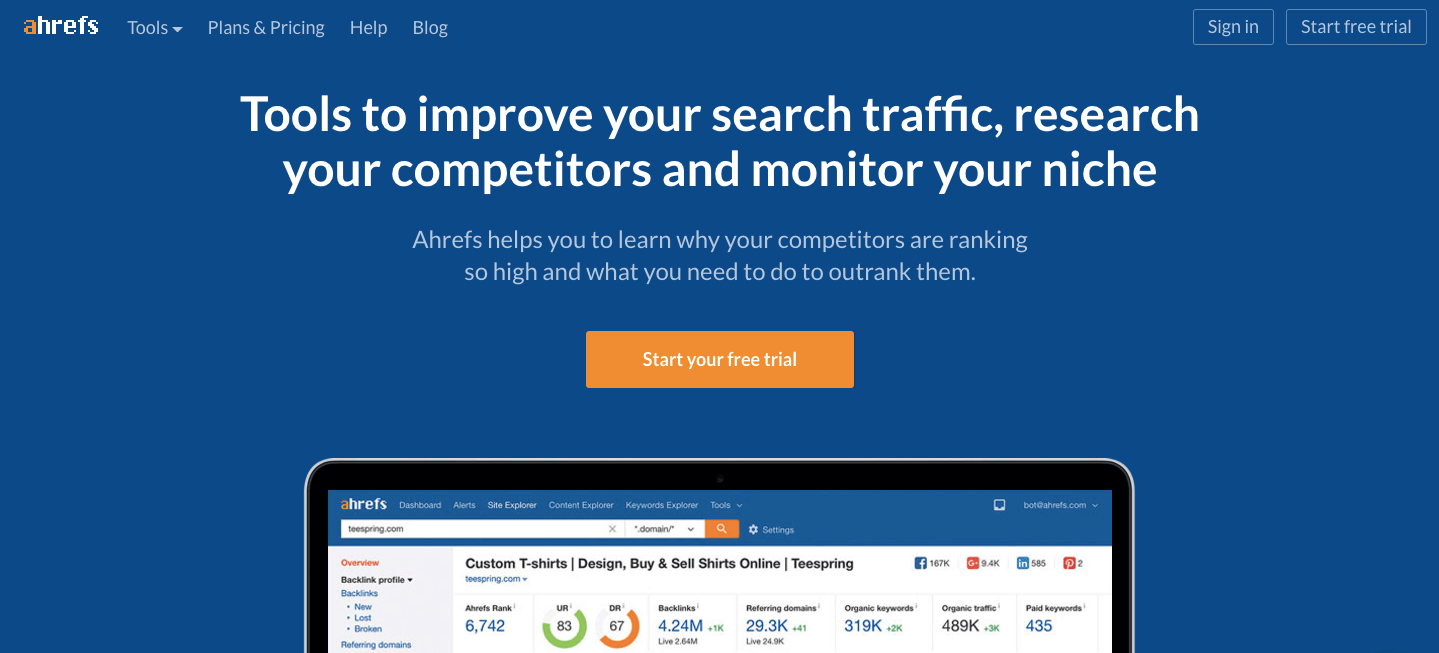
There are very few tools in the market which can match Ahrefs when it comes to backlink analysis. Ahrefs presents the most accurate link profile of your website and your competitors’ website.
Link building is important, and perhaps the most challenging aspect of SEO. If you’re serious about building authority links for your startup, you need a tool like Ahrefs by your side.
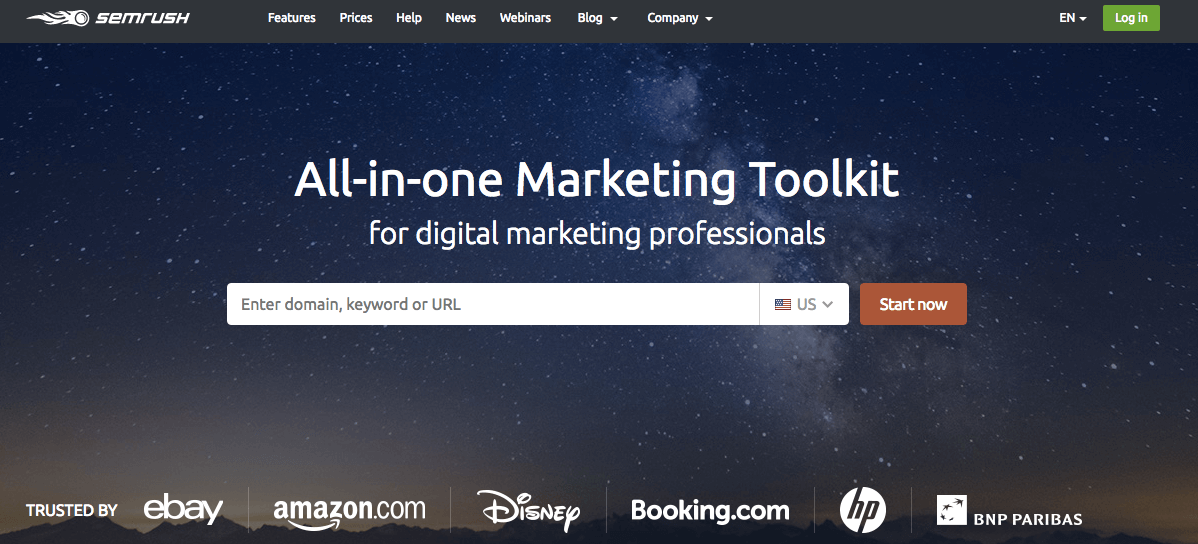
SEMrush is an all-in-one SEO and PPC tool which can help you do keyword research, competitors’ research, backlink analysis, PPC analysis, and much more.
It’s considered the swiss army knife of SEO tools of keyword research and competition analysis by marketing influencers. With SEMrush, you’ll be able to perform site audits to fix SEO errors on your website, track your rankings in SERPs for top keywords, unearth new keyword opportunities, and see what strategies your competitors are using to rank in search engines.ผลบอลสด7m888 ราคา
Started by Rand Fishkin back in 2004, Moz is one of the most popular SEO tools in the market. Moz’s keyword ranking tool helps you keep a track of fluctuations in search rankings and its site audit feature helps you identify SEO errors and fix them instantly.
Conclusion
Since it’s an ongoing battle between your startup and the competitors, you need to be consistent not just in implementing changes, but also in learning new stuff.
SEO, if done rightly on a startup website can turn out to be a successful lead generation medium, however, it requires a strategy, labor and patience to see the results. While you are educating yourself on a constant basis, you should also give your SEO expert at least 2 hours a week specifically for learning. The more he learns, the better he will perform!
Watch: 5 Ways to Upgrade Your SEO Techniques
For Curious Minds
A comprehensive SEO strategy should be defined as an integrated communication framework, not a standalone technical function. This approach is vital because search engines like Google now prioritize user experience and content relevance, meaning SEO success is deeply tied to your overall brand and content decisions. Thinking of SEO holistically ensures that every aspect of your digital presence works together to build authority and meet user needs.
Strong strategies typically incorporate:
Technical Foundation: Ensuring the website is crawlable, fast, and mobile-friendly from the initial development phase.
Content and Audience Alignment: Creating valuable content that directly addresses the questions and pain points of your target audience.
Authority Building: Earning high-quality backlinks and mentions through public relations and outreach that reinforce your brand's expertise.
A company that separates its web development from SEO might see initial indexing rates as low as 40%, hampering growth from day one. You can explore our full guide to see how these moving parts connect.
The primary difference lies in sustainability versus short-term gains. White hat SEO builds a lasting digital asset by adhering to search engine guidelines, whereas black hat SEO exploits loopholes for temporary rank boosts that often result in severe penalties. While competitors using black hat tactics might see a quick spike, they risk having their site de-indexed entirely, leading to a near-100% loss of organic traffic overnight.
When evaluating your approach, consider these factors:
Risk Tolerance: Are you willing to risk your entire online presence for a temporary advantage?
Brand Reputation: White hat techniques like creating valuable content enhance your brand's authority, while black hat practices can damage it.
Long-Term Value: Ethical SEO, like that practiced by industry leaders such as HubSpot, creates compounding returns over years.
Choosing the right path is foundational to your digital success. Discover more about building a sustainable strategy in our complete analysis.
SEO amplifies what is already there; it cannot create value out of a flawed product or service. An e-commerce site with a poor user experience, for example, will see high bounce rates and low conversions regardless of its search ranking. A retailer like Zappos succeeded because its renowned customer service created positive signals that SEO could then magnify.
To ensure SEO efforts support your business, focus on aligning them with core operational strengths. A new online retailer should first ensure its website offers an excellent customer journey. This means clear product descriptions, easy navigation, and a smooth checkout process. SEO can then target users searching for these quality experiences, leading to a conversion rate that is 2-3x higher than for sites with poor usability. This synergy between a great product and visibility is key, as detailed further in our guide.
Integrating SEO from day one is the most cost-effective way to build a high-performing website. For a small business, this means treating SEO as a foundational part of the site's blueprint, not an add-on. A proactive approach prevents structural issues that can cripple a site's ability to rank and may require an investment of over $10,000 to fix later on.
The initial implementation plan should include:
Keyword & Competitor Analysis: Before any design mockups, understand the search landscape and what your audience is looking for.
SEO-Friendly Site Architecture: Work with an SEO consultant to plan a logical URL structure and navigation that helps search engines understand your site's hierarchy.
On-Page SEO in Development: Incorporate title tags, meta descriptions, and header tags directly into the code during the build phase.
Content Planning: Develop a content calendar based on your keyword research to ensure you launch with relevant, optimized pages.
This foundational work sets the stage for long-term growth. To see a full checklist, continue reading the complete article.
Consultants can overcome rate objections by framing their services as a long-term investment rather than an hourly cost. The key is to shift the conversation from hours worked to business outcomes achieved. Demonstrating a clear return on investment (ROI) with case studies and financial projections helps clients see beyond the hourly figure. For instance, show how a past client's $5,000 SEO investment led to $50,000 in new organic revenue.
To build a compelling case:
Educate on Complexity: Briefly explain that modern SEO involves technical analysis, content strategy, and project management, not just keyword stuffing.
Provide Projections: Use industry benchmarks to forecast potential traffic growth and lead generation over 6-12 months.
Showcase Past Success: Share anonymized data or testimonials from clients like a B2B company that saw a 70% increase in qualified leads.
This value-based positioning justifies professional rates. Our article offers more tips on communicating the tangible benefits of expert SEO.
The role of an SEO expert is evolving from a technical specialist into a strategic project manager. As algorithms increasingly reward holistic user experiences, SEOs must now orchestrate efforts across multiple departments. Their success now depends on strong communication and leadership skills to ensure that technical requirements, content creation, and brand messaging are all aligned toward a common visibility goal.
Essential new skills include:
Cross-Functional Communication: The ability to clearly explain technical SEO needs to developers and content strategy to marketing teams.
Project Management: Managing timelines and deliverables for complex initiatives like a site migration or a major content audit.
Data Storytelling: Translating performance data into a compelling narrative that demonstrates business impact to stakeholders, showing how a 15% organic traffic lift contributed to sales.
This shift means the modern SEO expert is a central hub for digital strategy. You can learn more about developing these new capabilities in the full post.
Setting realistic expectations starts with defining SEO as a long-term channel for building brand authority and generating sustainable leads, not a switch you can flip for instant results. A B2B SaaS provider should focus on leading indicators of progress before expecting a surge in conversions. Tracking incremental gains over the first six months is crucial for maintaining stakeholder buy-in and demonstrating momentum.
Key performance metrics to track include:
Keyword Ranking Improvements: Monitor movement for non-branded, high-intent keywords, aiming for page one visibility within 6-9 months.
Organic Traffic Growth: Look for a steady month-over-month increase, such as a consistent 5-10% growth rate.
Lead Quality: Measure the increase in marketing qualified leads (MQLs) from organic search, a key indicator of attracting the right audience.
Focusing on these milestones helps justify the investment. Explore the full article for more on crafting a measurement framework.
Separating SEO from web development creates a cascade of costly and performance-damaging issues. When SEO is an afterthought, new websites often launch with critical flaws like poor site architecture, slow page speeds, and non-indexable content. Correcting these foundational problems post-launch can be 5x more expensive and time-consuming than addressing them during the initial build, delaying any potential return on investment.
For established enterprises, breaking down silos requires a strategic shift. Implementing an integrated workflow where SEO consultants are part of the core project team from the planning phase is essential. Companies like Microsoft have successfully embedded SEOs within product and engineering teams to ensure best practices are built-in. This collaborative model prevents rework, accelerates time-to-rank, and ensures the final product is built for both users and search engines. Our guide offers more strategies for fostering this collaboration.
Technical SEO is the bedrock upon which all other SEO efforts are built. While basic indexing gets your pages into a search engine's database, a deep focus on technical health signals to engines like Google that your site provides a high-quality user experience. This foundation is crucial because even the best content will underperform if it is on a slow, confusing, or insecure site.
Advanced technical SEO enhances authority by improving:
Crawl Efficiency: A clean site structure allows search engines to find and index your valuable content faster.
User Experience Signals: Factors like site speed and mobile-friendliness directly impact rankings. A site that loads in under 2 seconds can see a significant ranking boost.
Content Discoverability: Proper use of structured data and internal linking helps search engines understand the context and relationship between your pages.
A technically sound website acts as a multiplier for your content marketing. Find out how to audit your site's technical health in our complete guide.
The decision between an in-house team and an external consultant depends on your company's stage, resources, and long-term goals. An in-house team offers deep product knowledge and integration, while an agency provides specialized expertise and broader industry perspective. A hybrid model often provides the best of both worlds, with an in-house manager directing external specialists.
Consider these trade-offs:
In-House Team: Pros include full dedication and cultural alignment. Cons are high costs (a senior SEO manager can cost over $120,000 annually) and a limited range of specialized skills.
External Agency/Consultant: Pros are access to a diverse skill set and cost-effectiveness. Cons can include less focus on your business and potential communication gaps.
For a growing e-commerce business, starting with a consultant to build a foundation and then hiring an in-house manager to oversee execution is a proven path. Our full post explores how to make the right choice for your scale.
Companies must shift their content strategy from targeting keywords to covering topics comprehensively. Search engines now understand context and user intent, making old tactics like stuffing pages with exact-match keywords ineffective. The future of content is building topical authority, which means creating a cluster of content that thoroughly answers all related questions a user might have about a subject.
To adapt your strategy effectively:
Focus on Topic Clusters: Instead of one page for one keyword, create a central 'pillar' page for a broad topic, supported by 'cluster' pages covering related subtopics.
Answer User Questions: Use tools like 'People Also Ask' to identify and directly answer the questions your audience has.
Prioritize Natural Language: Write for humans, not bots. Using natural language and semantic variations will improve performance; aiming for a specific keyword density, like 2%, is an outdated practice.
This approach positions your brand as an expert resource. Discover how to build your first topic cluster in our detailed guide.
Transitioning from tactical fixes to a strategic SEO program requires a systematic audit and a cultural shift. The goal is to align SEO with broader business objectives, ensuring efforts are sustainable and impactful. A marketing director can champion this by demonstrating how an integrated approach can increase marketing-attributed revenue by over 25% annually.
A practical plan involves these steps:
Conduct a Comprehensive Audit: Evaluate your technical health, on-page content, and backlink profile to establish a baseline.
Define Business-Aligned KPIs: Shift from vanity metrics like traffic to business outcomes like lead quality and conversion rates.
Integrate SEO into Workflows: Create a process where the SEO team is involved in content planning, web development sprints, and PR campaigns from the start.
Educate Stakeholders: Host workshops to explain the value of long-term, ethical SEO to other departments and leadership.
This methodical transition builds a foundation for lasting success. Learn how to execute each of these steps in our complete article.
Amol has helped catalyse business growth with his strategic & data-driven methodologies. With a decade of experience in the field of marketing, he has donned multiple hats, from channel optimization, data analytics and creative brand positioning to growth engineering and sales.

 Growth Strategy and Planning
 Inbound Growth
 Growth Hacking
 Fractional CMO
 Search Engine Optimization
 Paid and Performance Marketing
 Social Media Marketing
 Demand Generation
 AI-Driven Growth Strategy
 AI-Native Workflow Automation
 Generative Engine Optimization
 Grove — AI Growth Strategist

 AI Automation
 Framework
 Case Study
 Tools
Tools Growth Tools
 Decision Tree
 Compare
 Custom GPT's
 Guides
 Offer
Offer Webstories
 Quizzes
 Blog
Blog AI-powered Apps
 Social Media Tools
 Agency Fit Score